Plenary and Invited Speakers

Kirstin Alberi
National Renewable Energy Laboratory
Kirstin Alberi is the Director of the Materials Science Center in the Materials, Chemical and Computational Science directorate at the National Renewable Energy Laboratory (NREL).
She received a doctorate in materials science and engineering from the University of California, Berkeley in 2008, where she studied the optical and electronic properties of highly mismatched semiconductor alloys. She came to NREL as a postdoctoral researcher in the Silicon Materials and Devices group to investigate the design and performance of thin crystalline silicon (c-Si) solar cells fabricated on inexpensive substrates. In 2010, Kirstin joined the Materials Physics group to conduct basic research on the optical and electronic properties of semiconductor alloys for photovoltaic, solid-state lighting and other energy-relevant technologies.
Antia Botana
Arizona State University
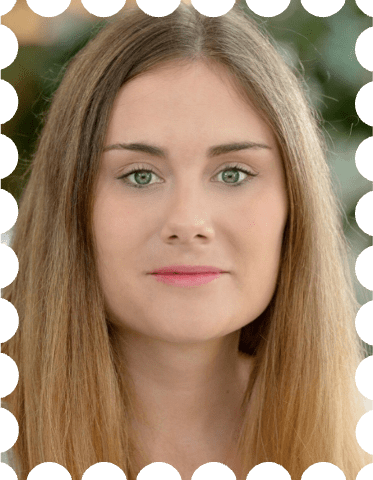
Antia Botana is an Associate Professor in the Department of Physics at ASU. Prior to joining ASU, she was a postdoctoral fellow at Argonne National Laboratory and at the University of California, Davis. Her research employs electronic structure theory to direct the computational design of materials with novel functionalities. She works on topics ranging from superconductivity to frustrated magnetism, and confinement effects in nanostructures. She is the recipient of an NSF-CAREER award and a Sloan Research Fellowship.
Bertrand Cambou
Northern Arizona University
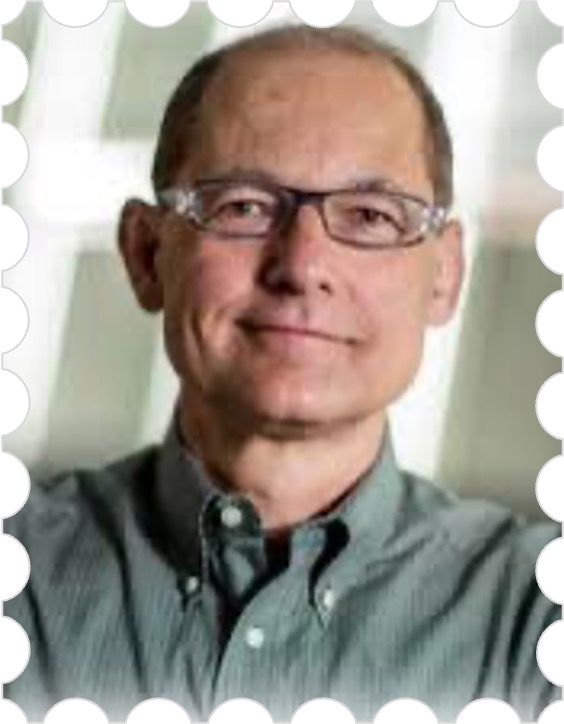
Since 2015, Bertrand has been a professor in Nanoelectronics and cybersecurity at NAU. He is leading research programs funded by the Army Research Laboratory, and industrial partners (Intel, Castle Shield, and Crossbar). With 135 patents, he is an Invention Ambassador of the American Association for the Advancement of Science, and a senior member of the National Academy of Inventors. He worked in the microelectronics and cybersecurity industry at Crocus, AMD, Gemplus, Ingenico, and Motorola. At Motorola, he was named “Distinguished Innovator”, and lead the development of MEMS sensors, the smartMOS, RFLDMOS and RF-GaAs technologies. He directed the Power PC alliance between Motorola, Apple and IBM.Bertrand holds a doctorate degree in Electronics from Paris-Saclay University, an Engineering diploma from Supelec, and a master’s degree in physics from Toulouse University.
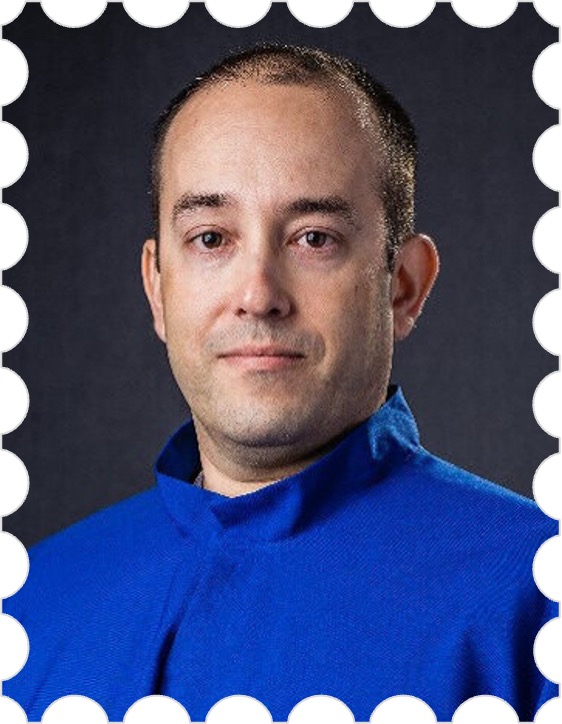
Carlo Da Cunha
Northern Arizona University
Carlo da Cunha is an Assistant Professor and Chair of Electrical and Computer Engineering at the School of Informatics, Computing, and Cyber Systems (SICCS) at Northern Arizona University (NAU). He earned his Ph.D. from Arizona State University (ASU) and completed postdoctoral research at McGill University. Prior to joining NAU, he served as the Engineering Physics program chair at the Federal University of Rio Grande do Sul (UFRGS) in Brazil. Additionally, he has held visiting professor positions at the Technische Universität Wien in Austria and Chiba University in Japan.
His research bridges the gap between theoretical physics and practical applications, focusing on the intersection of complex systems, electronic materials, and artificial intelligence (AI). His work explores novel approaches to solving intricate problems in physics using AI, while also designing electronic materials to implement AI functions. Simultaneously, he leverages AI to explain and design emergent behaviors in complex biological, human, and robotic systems. His work resulted in two books: Machine Learning for the Physical Sciences and Introduction to Econophysics.
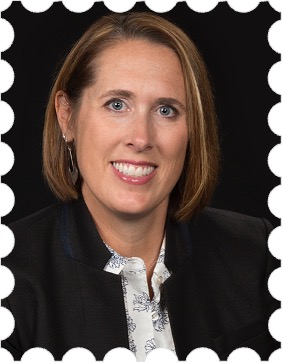
Dana Dattelbaum
Los Alamos National Laboratory
Dana Dattelbaum is an American physicist and scientist at Los Alamos National Laboratory. She leads NNSA’s Dynamic Materials Properties portfolio at LANL, which provides experimental data, platforms and diagnostics for materials behaviors relevant to nuclear weapons performance, ranging from plutonium to high explosives. Dattelbaum is internationally recognized for her research on shock and detonation physics, the shock initiation of energetic materials, static to time-resolved spectroscopies, and studying materials at extreme conditions.
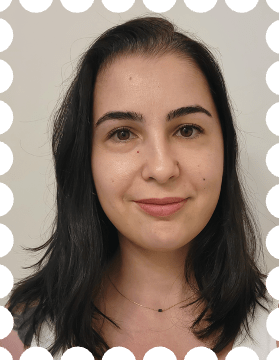
Burcu Duran
New Mexico State University
Dr Burcu Duran (she/her) is an assistant professor at New Mexico State University (NMSU). She received her PhD in experimental nuclear physics from Temple University. Prior to her appointment at NMSU, she conducted research at Thomas Jefferson National Accelerator Facility (TJNAF) as a postdoctoral researcher affiliated with the University of Tennessee, Knoxville.
Dr Duran explores the fundamental questions in nuclear physics, mainly understanding the
basic building blocks of all visible matter in the universe. More specifically, she uses high energy
electrons at TJNAF as a probe to understand the structure of the nucleons (protons and
neutrons) in terms their quarks and gluons degrees of freedom. Her research also focuses on
the non-trivial aspects of nuclear structure such as modifications to the nucleon structure in the nuclear medium and short-range nuclear behavior.
Damien Easson
Arizona State University
Damien Easson is theoretical physicist and cosmologist working at the interface of particle physics and cosmology. He has worked on the early universe, inflation and bouncing cosmology, string cosmology, modified gravity, dark energy, quantum gravity and gravity/gauge theory correspondence.
Easson received Bachelor degrees from Vassar College in Physics, Mathematics and Astronomy in 1996. He received an M.S. in Physics in 1998 from Brown University where he continued, receiving his Ph.D. in Physics in 2002. He held postdoctoral positions at the University of Tokyo’s Institute for Physics and Mathematics of the Universe, Durham University in the U.K., Syracuse University and McGill University in Canada. He joined the Physics Department at Arizona State University as Assistant Professor in 2010 and became Associate Professor in 2017.
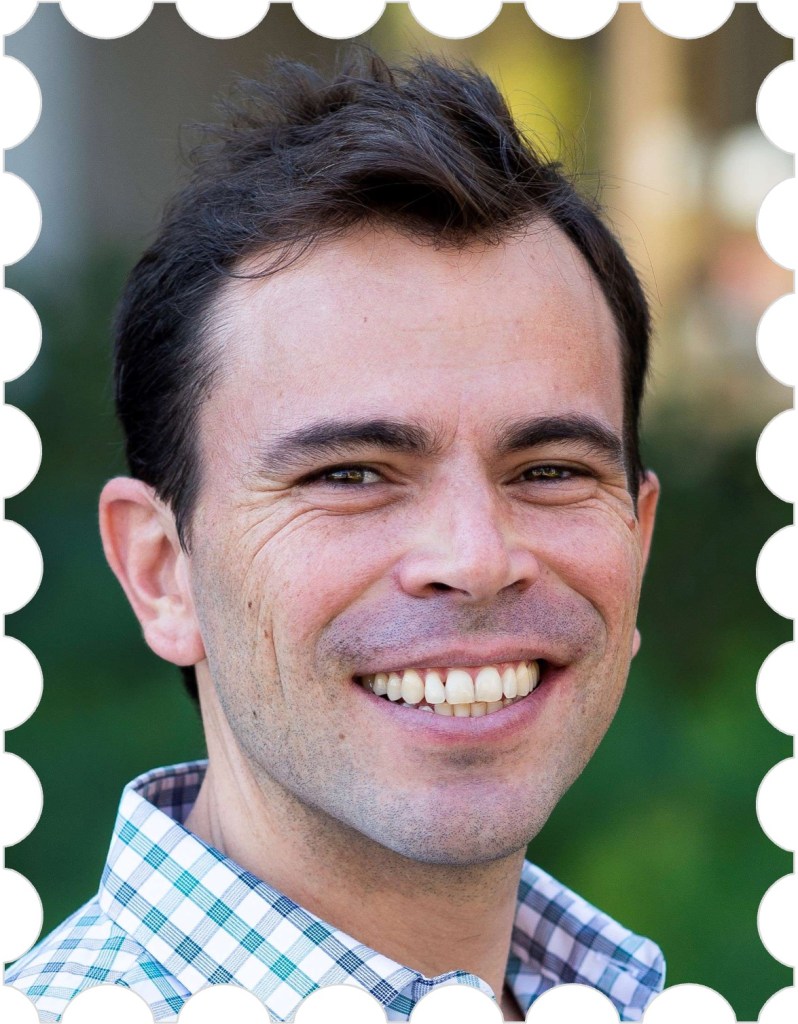
Luis Pedro García-Pintos
Los Alamos National Laboratory
Luis Pedro García-Pintos is a Staff Scientist at the Theoretical Division (T-4) of Los Alamos National Laboratory. Before joining LANL, he was an Assistant Research Scientist at the University of Maryland College Park, and did his PhD and undergrad at the University of Bristol and the Universidad de la República in Uruguay, respectively. Luis Pedro’s work focuses on characterizing the dynamics of physical systems from first principles. Such work has included studying equilibration processes, quantum thermodynamics, open quantum systems, evolutionary biology, quantum metrology, and quantum computing.
Jacob Henshaw
Sandia National Laboratories
Jacob Henshaw is a staff scientist at Sandia National Laboratories working in silicon qubit quantum computing as well as quantum sensing using defect centers in diamond. He received his PhD from City University of New York – Graduate Center in physics working under Prof. Carlos Meriles. His work focused on the charge state dynamics of defect centers in diamond for use in quantum sensing and quantum information processing. He received an NSF-CREST postdoctoral fellowship to continue working with Prof. Meriles on dynamic nuclear polarization in diamond. He then accepted a postdoc at Sandia National Laboratories and assisted in building quantum sensing capabilities in Andrew Mounce’s lab.
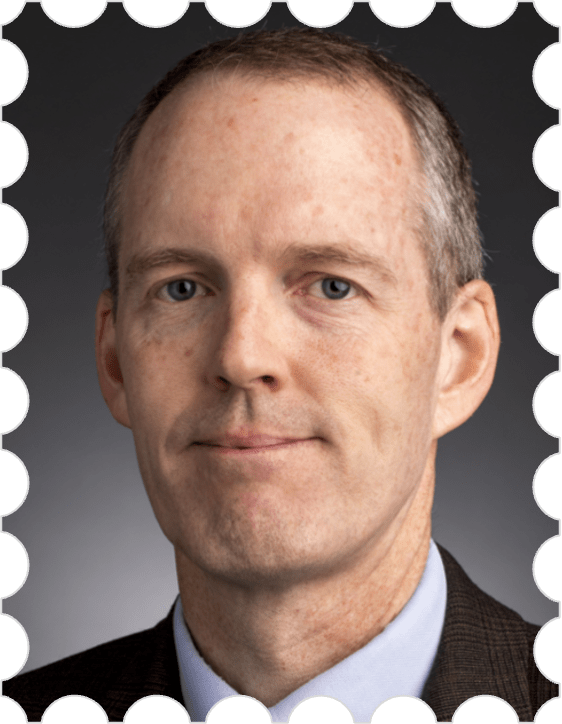
Joseph Jensen
Utah Valley University
Joseph Jensen is an infrared astronomer who studies the expansion of the universe. He is a member of the TRGB-SBF Project team that has been awarded JWST time in cycles 2 and 3 to study the distance scale and stellar populations in elliptical galaxies using NIRCam. He has been a professor of physics and astronomy at Utah Valley University for the past 15 years. Before that he worked at the Gemini Observatory in Hawaii and Tucson, where he helped develop new instrumentation for the twin 8-m telescopes. He got his Ph.D. in astronomy from the University of Hawaii Institute for Astronomy and his B.S. in astronomy from Caltech.
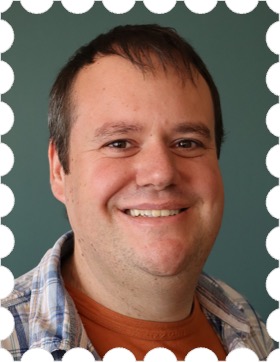
Joe Llama
Lowell Observatory
Dr. Joe Llama is an Associate Astronomer at Lowell Observatory specializing in the detection and characterization of small exoplanets. His research focuses on using the radial velocity technique to precisely measure the masses of Earth-sized exoplanets. Recently, he led the commissioning of the Lowell Observatory Solar Telescope (LOST), a specialized instrument designed to study our Sun with a planet-finding spectrograph. This work aims to better understand how stellar activity interferes with the detection of the smallest exoplanets. He received his PhD from the University of St Andrews, Scotland before moving to Lowell Observatory in 2014.
Angel Martinez
Northern Arizona University
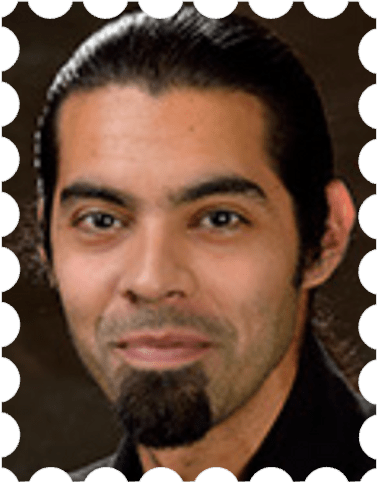
Angel Martinez is an Assistant Professor in the Applied Physics and Materials Science Department at NAU. His research experience spans many kinds of soft matter systems, including polymers, colloids, and liquid crystals, having explored ways to shape and guide their structural self-organization using light and surface functionalization. He has extensive experience in 2D and 3D optical imaging of liquid crystals and liquid crystal colloids via techniques such as polarized optical microscopy, multi-photon nonlinear imaging and holographic particle tracking. Some of his current interests include numerically simulating the dynamics of liquid crystals under stress, studying the rheological effects of defect networks in liquid crystals and other ordered fluids, and developing machine learning algorithms to reconstruct complex 3D structures in soft materials from 2D optical data.
Diego Munoz
Northern Arizona University
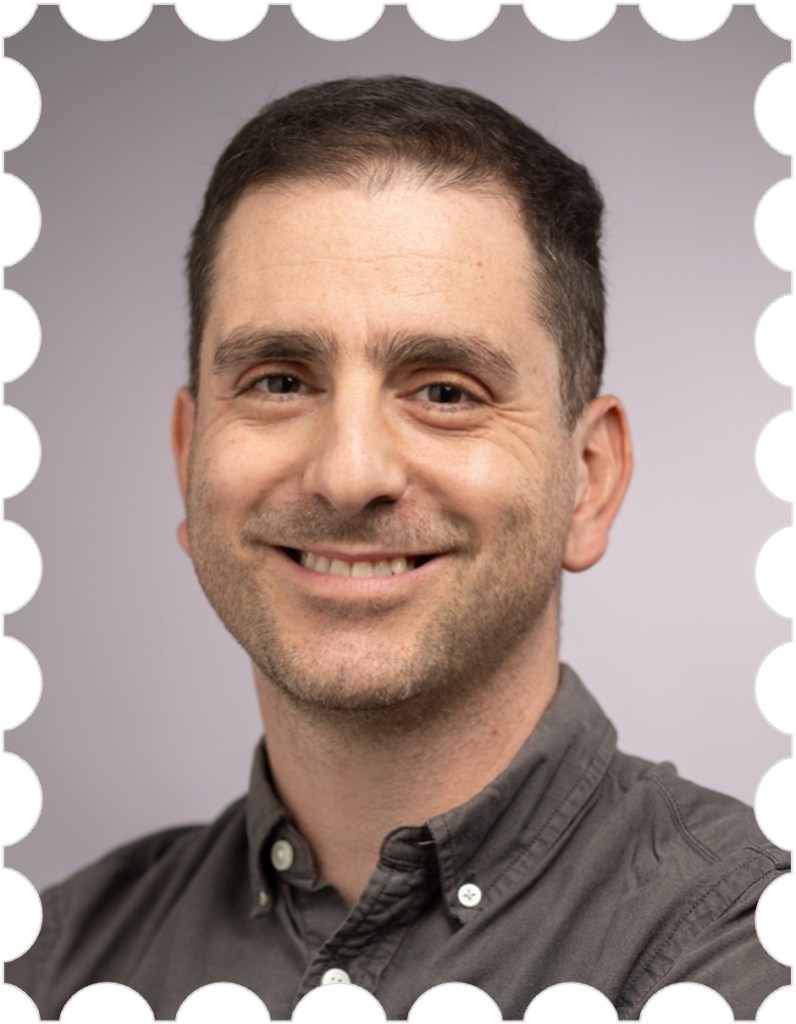
Diego Munoz is a computational astrophysicist and assistant professor
at Northern Arizona University. He obtained his PhD in Astrophysics at
Harvard University. Before joining NAU, he was a research fellow at
Cornell University and Northwestern University. He works on theoretical
and computational astrophysics with a focus on planet formation, planet
dynamics and astrophysical fluid dynamics. Diego uses super-computer
simulations and pencil-and-paper calculations to study how planets,
stars or blackholes evolve over short and long time-scales as they
interact with surrounding gas to explain their observed orbital
properties.
Spencer Olson
Air Force Research Laboratory
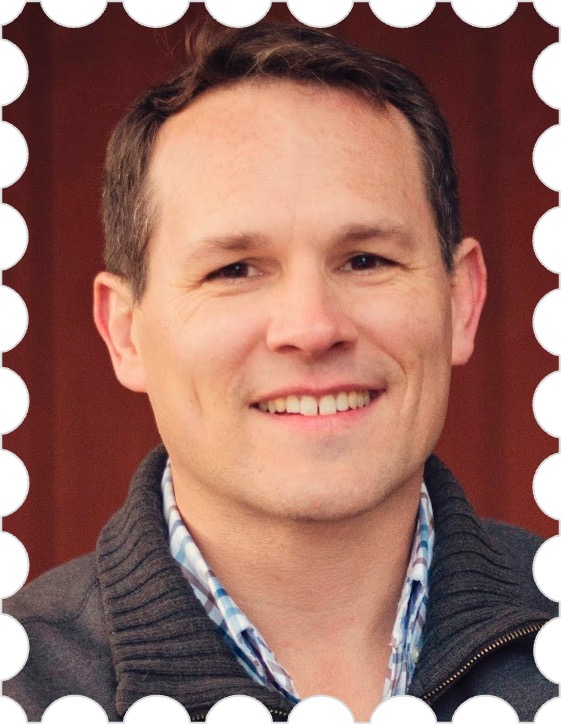
Spencer E. Olson is a senior research physicist in the Space Vehicles Directorate at the Air Force Research Laboratory. Dr. Olson received his Ph.D. in physics from the University of Michigan in 2006. His doctoral research was in high-gradient, magnetic-field atom guiding for the purpose of establishing a truly continuous-wave atom laser. Following his PhD work and while a National Research Council postdoctoral research associate at the Naval Research Laboratory from 2006 to 2008, Dr. Olson pioneered and demonstrated methods of blue-detuned atom trapping that confine atoms in a toroidal configuration using a single laser beam. Beginning in 2009 and while at AFRL, Dr. Olson has pioneered new experimental methods of confining atoms in ultratight magnetic fields, developed new computational methods to simulate collisional systems with application to both cold-atom physics as well as cold or hot plasma systems, developed compact low-power electronics for atomic measurements, and developed components to enable low-SWaP alkali sources for quantum clocks and ultracold quantum sensing systems. Dr. Olson continues to pursue research in cold-atom systems, such as Bose-Einstein Condensate (BEC) and atom-cavity quantum electrodynamics, with application to atom-based inertial, magnetic, gravitational, and other sensing. In 2023, Dr. Olson was honored by the Department of Defense Basic Research Office as a LUCI fellow, for his work in micro-optical cavities.
Lisa Prato
Lowell Observatory
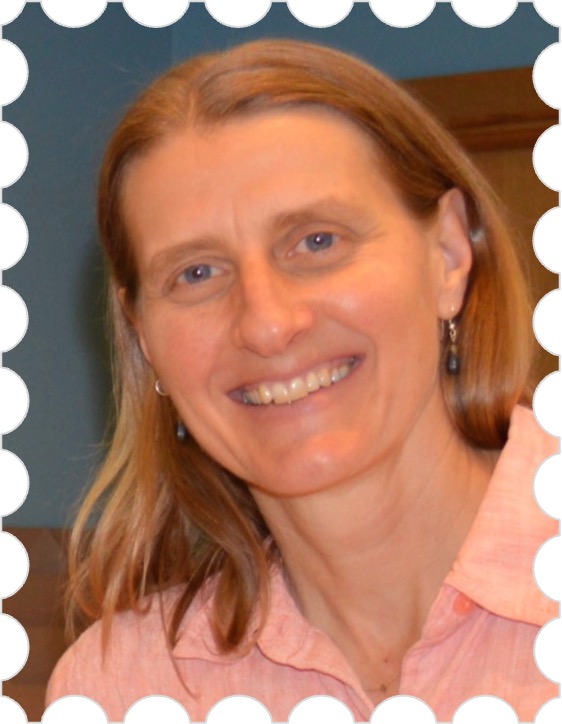
Lisa Prato is from the Boston area and attended the University of Massachusetts, Amherst, where she completed undergraduate degrees in Astronomy and in English and discovered the world of scientific research. After another year at UMass as a non-degree graduate student, Prato moved to Colombia, South America, and worked for 3 years as a professor in the Department of Physics at the Universidad Industrial de Santander in the city of Bucaramanga, teaching classes in astronomy and astrophysics and working toward a masters degree in Physics. Prato returned to the US to complete a PhD in Astronomy at the State University of New York at Stony Brook, followed by two postdoctoral positions at UCLA, one with Nobel Laureate Dr. Andrea Ghez and one with Dr. Ian McLean. Prato, a Tenured Astronomer on the science faculty at Lowell Observatory and an Adjunct Professor at Northern Arizona University, is a champion of Diversity, Equity, Inclusion, and opportunity. These principles guide Prato’s mentoring approach in her work with postdocs, undergraduates, interns, gradate students, and colleagues on young binary stars and planet formation. Prato is currently serving a three year term on the Board of Trustees of the American Astronomical Society.
Melissa Revelle
Sandia National Laboratories
Melissa Revelle received B.S. degrees in Physics and Astronomy from the University of Arizona in 2009 where she worked as a research assistant studying the polarizability of atoms. She earned her M.S. degree in 2013 followed by her Ph.D. in 2016 while studying ultracold Fermi gases at Rice University in Houston, TX. In 2016, she joined Sandia National Laboratories where she is currently a Principal Member of Technical Staff. Her research focuses on coherent manipulation and control of trapped ions and advancing the technology of microfabricated surface traps. Dr. Revelle’s awards include the Wilson Research Award from Rice University in 2017.
Ludger Scherliess
Utah State University
Ludger Scherliess is a Professor of Physics at Utah State University. His main research activities focus on the physics of the Earth’s upper atmosphere including the interpretation and analysis of ground- and satellite-based measurements, the development of empirical models for the global and local ionospheric electrodynamics, plasma drifts, and neutral parameters and the development of space weather data assimilation models for the Earth’s ionosphere and thermosphere. Recently, he became the Principal Investigator (PI) of the Atmospheric Wave Experiment (AWE), which is one of NASA’s prime Heliophysics missions located on the International Space Station.
Doug Shephard
Arizona State University
Prof. Shepherd is an associate professor in the Center for Biological Physics and Department of Physics at Arizona State University. He directs the Quantitative Imaging and Inference Laboratory (qi2lab), a group of interdisciplinary researchers interested in understanding how the rules of life interact with the laws of physics. Our approach relies on building joint optical microscopy and computational approaches to measure and understand how fluctuations, often called noise in the experiment, encode information on the underlying physics. Use this “toolkit” to study soft matter and biophysics questions ranging from the mechanics of gene expression regulation to the influence of fluid dynamics on bacterial biofilm formation.
Kanu Sinha
University of Arizona
Kanu Sinha is an Assistant Professor at the Wyant College of Optical Sciences at University of Arizona where she leads the Quantum Optics and Open Quantum Systems (QOOQS) group. She earned her Ph.D. in Physics at University of Maryland (UMD), College Park, and has held postdoctoral appointments at the Institute of Quantum Optics and Quantum Information (IQOQI) in Innsbruck and the US Army Research Laboratory (ARL). She was subsequently an Associate Research Scholar at Princeton University, and an Assistant Professor at Arizona State University before starting her current position at UA. Her research is at the intersection of quantum optics, quantum information and open quantum systems – with a focus on quantum fluctuation phenomena, collective atom-field interactions and non-Markovian open quantum systems.
Ivan Smalyukh
CU Boulder
Ivan I. Smalyukh is a full tenured professor at the Department of Physics, University of Colorado at Boulder, which he joined in 2007 (promoted from Assistant to Associate Professor with tenure in 2014 and from Associate to Full Professor in 2017). He is also a Director of the International Institute for Sustainability with Knotted Chiral Meta Matter (WPI-SKCM²), Hiroshima University, Japan, as well as the founding fellow of Renewable Sustainable Energy Institute (a joint institute of CU-Boulder and NREL). He also directs the Soft Matter Physics Research Group at CU-Boulder. He is researching chiral liquid crystals, colloids, biopolymers, living matter and magnets, with the focus on discoveries of self-assembly and chirality-enabled particle-like topological defects and solitons, including fundamental research aspects and applications related to electro-optics, photonics and renewable energy. Among his sustainability-focused research interests is the energy efficiency of windows and building envelopes overall, where he develops highly thermally insulating and stimuli-responsive materials. He published ~270 peer-refereed articles, including 8 in Nature and Science, as well as dozens of patents and the Guinness record for developing the World’s most visible-range transparent solid. He is an elected fellow of the American Physical Society, Optica and SPIE. He received many awards, including the Bessel and Glenn Brown Awards, Gray Medal, NASA iTech award and Mid-Career Award of the International Liquid Crystal Society, the PECASE Award from the Office of Science and Technology of the White House and the GSoft Award from the American Physical Society.
Chris Verhaaren
Brigham Young University
Chris Verhaaren is an Assistant Professor in the Department of Physics and Astronomy at Brigham Young University. He received his PhD from the University of Maryland at College Park and worked at as a postdoctoral scholar at the University of California at both Davis and Irvine. His research is focused on how the Standard Model of particle physics can be extended to address questions regarding the nature of the Higgs boson and dark matter as well as how such extensions can be tested experimentally.
Bethany Wilcox
CU Boulder
Bethany Wilcox is a member of the Physics Education Research group. Her research interests include understanding and addressing students’ difficulties utilizing sophisticated mathematical tools and techniques in the context of physics problem solving. In addition to investigating students’ difficulties in the context of a single course, she is also interested in understanding how these difficulties change longitudinally as students advance through the curriculum and encounter these mathematical tools in multiple contexts. She is also interested in the development of research-based and validated assessments of student learning that can be used to measure the impact of curricular changes or compare student learning across courses and institutions. In particular, she is utilizing advanced testing theories to explore viable options for creating modular assessments that can address variations in content coverage in across courses.
Miguel José Yacamán
Northern Arizona University
Miguel José Yacamán got his BS, MSc and PhD from the National University of Mexico (UNAM). He spent a year in Cambridge and Warwick universities working on his PhD dissertation. Later he did postdoctoral stays in Oxford, UK (1976) and Nasa Ames, California (1978). He is now Regents professor at the APMS department in NAU.
MJY has supervised 160 undergraduate students, 25 masters’, 55 PhD students and 85 post-doctoral fellows. Dr Yacaman has an h index of 83. His work has been cited more than 46896 times. His paper on Effect of Silver in Bacteria has received more than 8400 citations. His work gets more than 3000 citations per year and 40 citations per paper. According to AD Scientific index he is in the top 2% of researchers in USA and worldwide in the area of materials science.
Awards
- National Prize in Exact Sciences of the Mexican Academy of Sciences (1982)
- Fellow of the Materials Research Society (2019)
- Fellow of The American Vacuum Society (2019)
- John Wheatley Award of the American Physical Society (2011)
- Institute of Metals Robert Franklin Mehl Award and Distinguished Lecture, The Metals and Materials Society USA, 1997
- Spiers Memorial Award Medal of the Faraday section of the Royal Society of Chemistry U.K (2022)
- Edward Bouchet Award, American Physical Society, 2017
- SCOPUS-Elsevier award for the most cited Latin American Scientist 2015
- Doctor Honoris Causa, Universidad de Córdoba, Argentina, 2015
- Fellow of the Microscopy Society of America, 2015
- Emeritus Researcher (Investigador Emérito) Sistema Nacional de Investigadores, México, 2012
- National Award of the Society for the Advance of the Chicanos/Hispanics and Native Americans in Science (SACNAS), 2014
- Doctor Honoris Causa Universidad Autónoma de Nuevo León, 2012
- Fellow of the American Association for the Advanced of the Science (AAAS) (2009)
- Member of the Board of Trustees of the Universidad Veracruzana (1998-2008)
- Mehl Award and Distinguished Lecture, The Metals and Materials Society USA, 1997
- Fellow of the American Physical Society, 1995
- National Prize of Sciences in Mexico, 1992
- Guggenheim Fellowship, 1988
- Prize in Exact Sciences of the State of Mexico, 1987
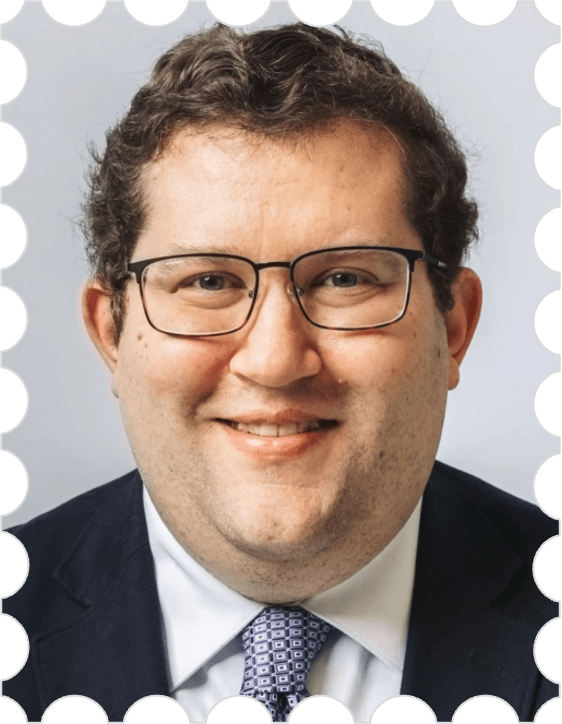
Jeremy Young
PEN America
Jeremy C. Young is the Freedom to Learn Program Director at PEN America, where he leads efforts to fight government censorship in higher education institutions. He directs PEN America’s work on educational gag orders, the Champions of Higher Education initiative, and an expanding network of coalitions to mobilize support for professors and teachers. A former history professor, Young holds a Ph.D. in U.S. history from Indiana University and is the author of The Age of Charisma: Leaders, Followers, and Emotions in American Society, 1870-1940 (Cambridge University Press, 2017).
 2024 Four Corners Meeting of the American Physical Society